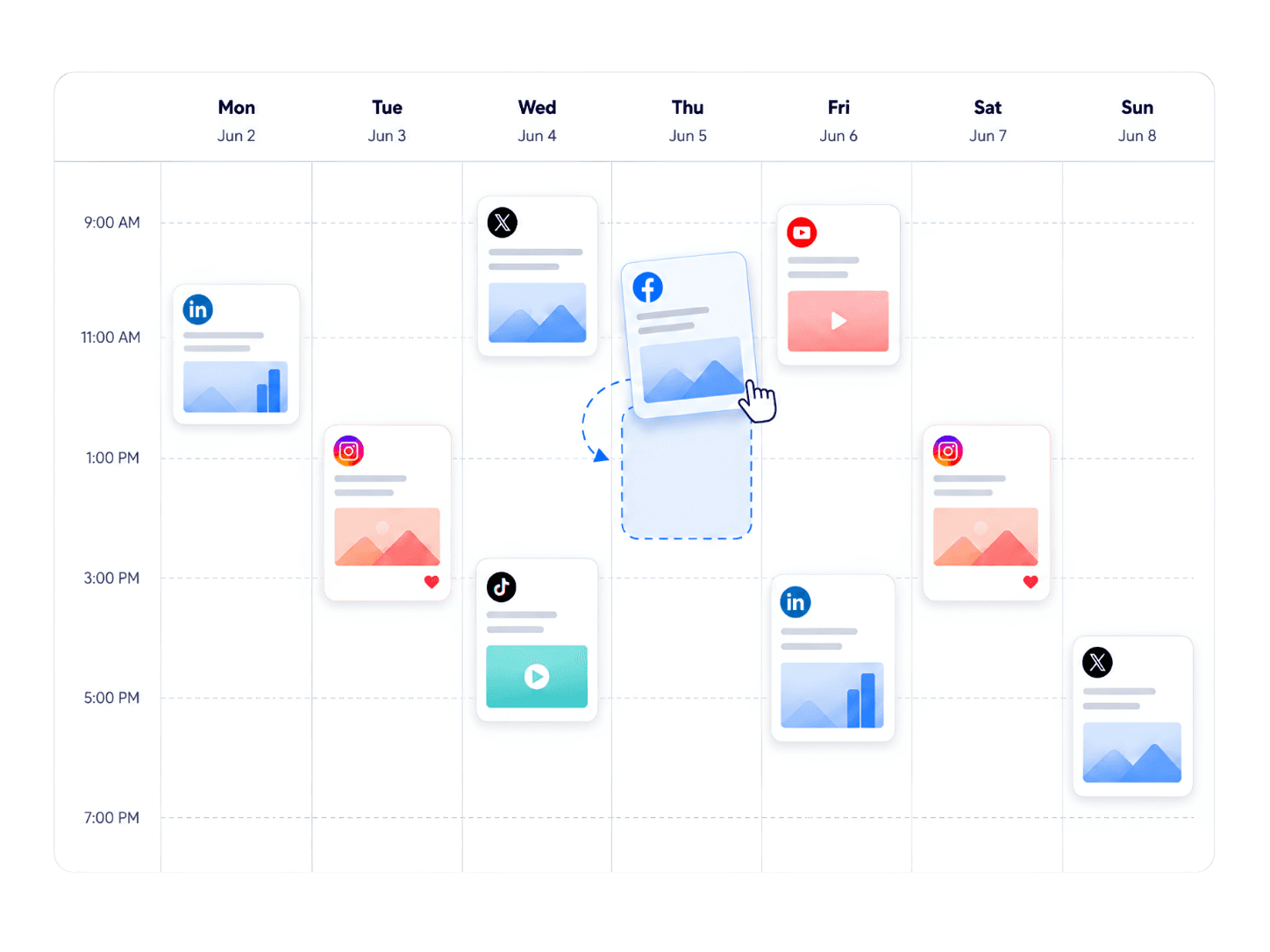
A useful content calendar is not a spreadsheet full of promises. It is a small operating system that tells you what to make next, where it belongs, and when it is ready to publish.
Start with a repeatable weekly rhythm
Choose a pace you can maintain during a busy week. Three strong posts published consistently will teach you more than fourteen rushed posts followed by silence.
Give each publishing day a job. One day might explain a customer problem, another can show the product in use, and a third can share a lesson from building the company.
- Monday: name a problem your audience already feels
- Wednesday: demonstrate a workflow, feature, or result
- Friday: share a clear opinion or behind-the-scenes lesson
Separate ideas from finished posts
Keep an idea bank before you build the calendar. Capture customer questions, objections, product changes, surprising metrics, and useful mistakes without trying to write the final post immediately.
During planning, promote only the best ideas into the calendar. This keeps the schedule intentional and removes the pressure to invent something from a blank page every morning.
Choose the format after the message
The idea should decide the format. A step-by-step lesson may work as a slideshow, a visual contrast can become a green-screen meme, and a product walkthrough is usually clearer as a short video.
Reusing one idea does not mean copying the same asset everywhere. Keep the core point, then adapt the opening, length, and media for the network where it will appear.
A calendar becomes easier to maintain when every slot has a purpose, not just a date.
Review the system, not just the numbers
At the end of the week, look for two signals: which topics earned attention and which posts were easiest to produce well. The best next plan sits at the overlap.
Keep what worked, remove the slots you repeatedly skip, and move unfinished ideas back into the bank. Your calendar should get simpler and more accurate over time.